Model Identification Guide
Start with What You Can See
Every Mathmos lava lamp announces something about itself before you even pick it up. The base shape, the globe profile, the cap style, the label — each element carries information, and together they narrow the field considerably. The identification process is essentially archaeological: you’re reading layers of design decision that accumulated across decades of production, and the clues are right there on the surface, waiting to be read slowly.
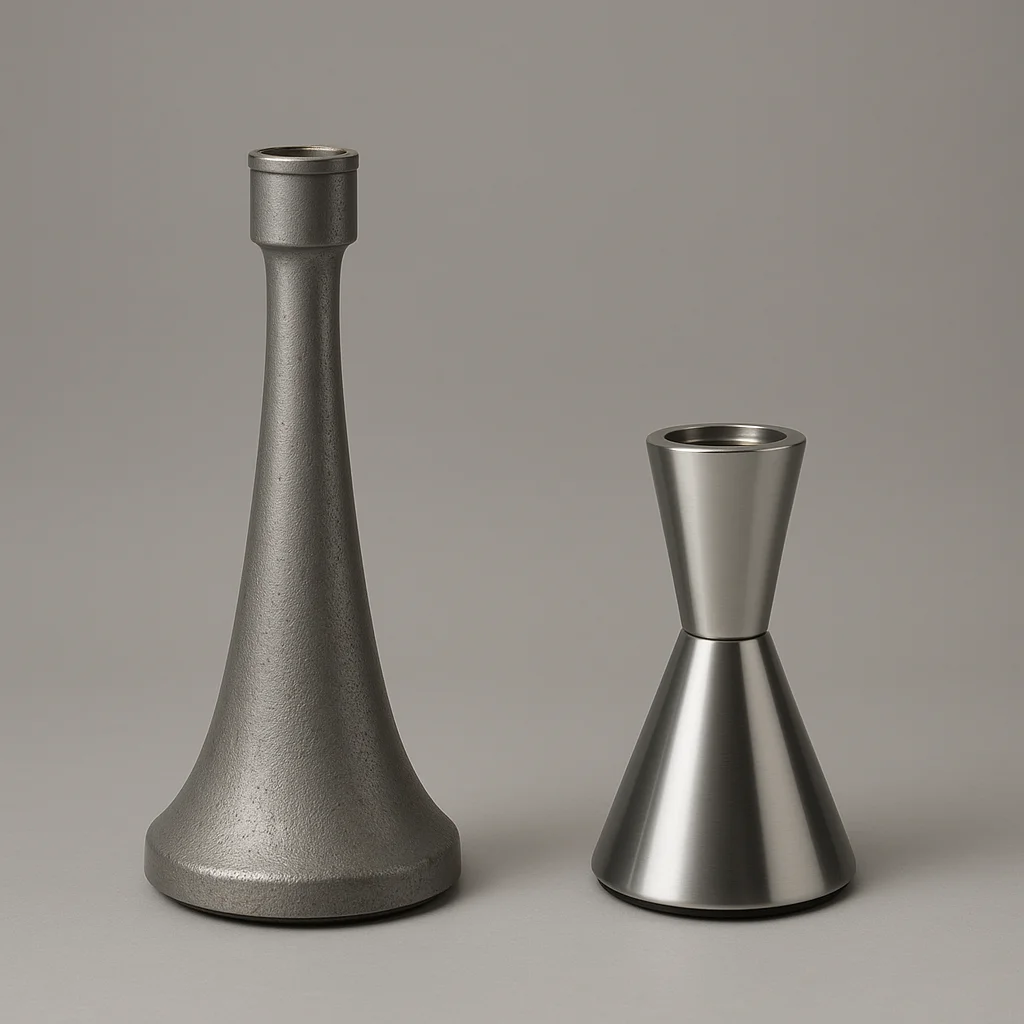
Begin with the base. Pre-1990s bases tend to be heavier, more generously proportioned, and often carry a certain industrial seriousness — a broad foot, a turned aluminium column, a sense that the thing was built rather than manufactured. Later bases became slimmer and more refined, following broader trends in product design toward the minimal. (This isn’t a value judgement. The later lamps are elegant in their own way. But the difference is unmistakable once you’ve held both.)
Labels, Markings, and the Language of Production
The label is often the single most reliable dating tool available to a collector, provided it survives intact — and provided you know what you’re looking at. Early Crestworth-era lamps carried simple printed labels with the Crestworth name and basic product information, typically applied to the underside of the base. The transition to Mathmos branding in the early 1990s brought redesigned labels with updated regulatory markings and, crucially, new country-of-origin text that can help bracket a production window quite precisely.
Electrical markings deserve particular attention. The BS plug standard, wattage ratings, and CE marking all followed regulatory timelines that translate neatly into date ranges — a lamp showing CE certification, for instance, was produced no earlier than 1993 for UK market goods. The Production Dating Reference page maps these regulatory markers in detail, and cross-referencing label text against that guide will resolve many otherwise ambiguous cases.
Colour-coding on labels, font choices, and even the paper stock of adhesive labels shifted across production runs in ways that are subtle but consistent. Collectors who have handled many lamps develop an instinct for these things, but instinct is really just accumulated observation — which is to say, it can be learned.
Globe and Cap Profiles
The glass globe and its metal cap are the lamp’s most visually prominent elements, and they changed more than casual observation might suggest. Early globes are hand-blown in ways that left slight asymmetries — a slight lean, a barely perceptible variation in wall thickness — that later machine production eliminated almost entirely. This is one area where the imperfection is the evidence.
Cap profiles are particularly useful for narrowing down an era. The original Astro caps were relatively deep, with a distinctive turned lip; later iterations became flatter and more utilitarian. There are also transitional caps — produced during model redesign periods — that combine features of both generations and can confuse an otherwise straightforward identification. The Design Evolution by Era page traces these transitions chronologically and is worth consulting alongside any hands-on examination.
Working Through Uncertainty
Not every lamp presents itself cleanly. Replacement parts, amateur restorations, and decades of domestic life can scatter the original components across a lamp’s history in ways that require careful untangling. A 1970s base might carry a 1980s globe. A cap might have been replaced at some point with whatever was available. The goal isn’t to impose false certainty, but to understand which elements of a lamp are original and which aren’t — because that understanding shapes every restoration decision that follows.
When identification is genuinely unclear, the combination of base weight, label fragments, glass character, and cap profile usually allows at least an approximate era attribution. The Collector’s FAQ addresses the most common points of confusion, and the Restoration Principles page explains why accurate identification matters so much before any restoration work begins.